
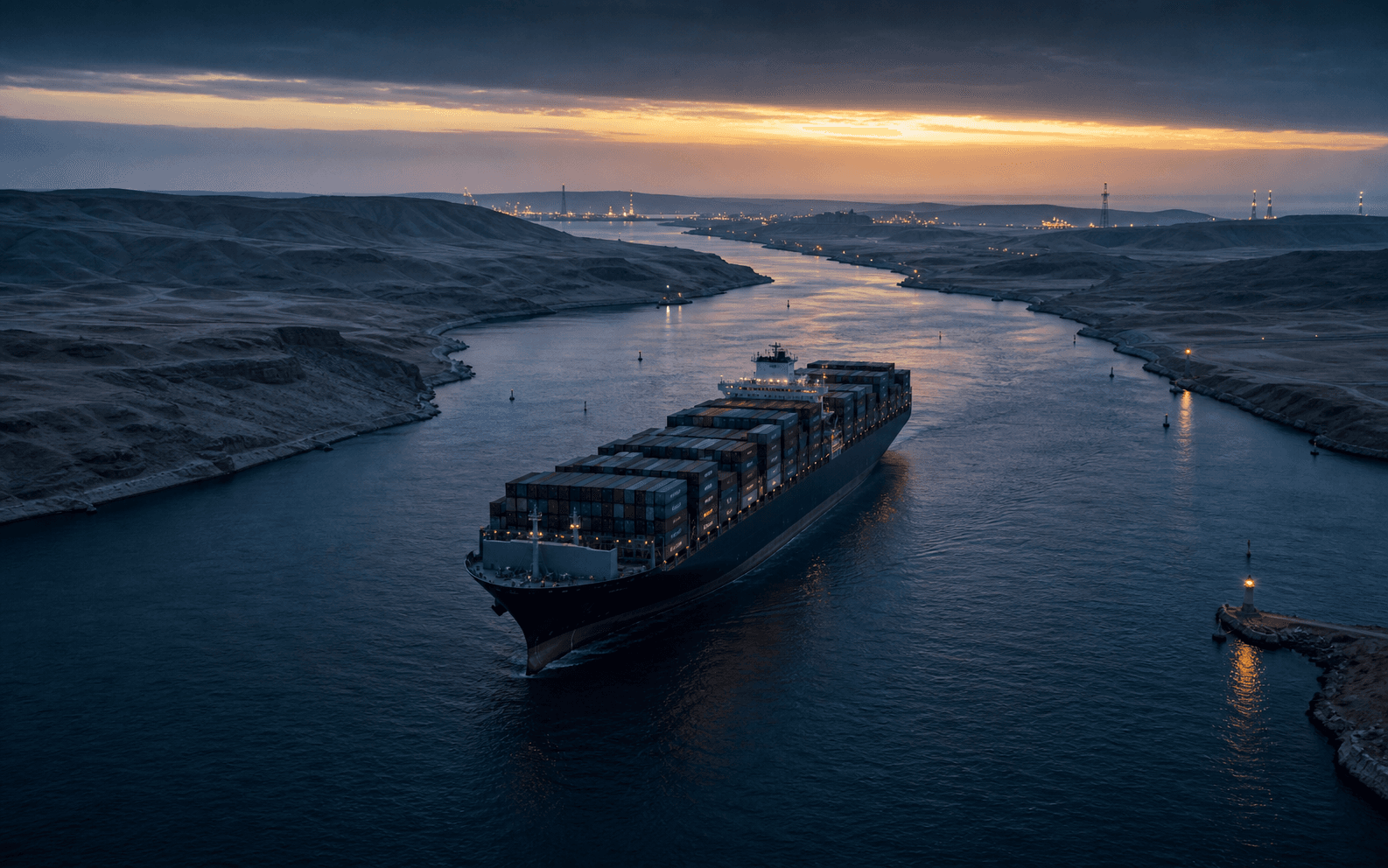
Global trade is built on an illusion of open water. Although the oceans appear limitless, a significant share of commercial traffic is concentrated through a small number of ports, canals, and narrow maritime passages. These chokepoints make trade efficient during normal conditions, but they also create places where a regional disruption can quickly become a global economic problem.
The first effects usually appear operational rather than strategic. Ships are delayed, insurers reassess risk, and logistics teams search for alternative routes. Longer voyages consume more fuel and reduce the number of available vessels. Manufacturers waiting for specialized components may discover that a delay affecting one shipment can interrupt an entire production schedule.
The deeper vulnerability is limited visibility. Many organizations understand their direct suppliers but have little information about the ports, shipping companies, and lower-tier manufacturers supporting them. A company may believe it has diversified its suppliers while all of those suppliers still depend on the same maritime corridor.
Resilience therefore requires more than maintaining additional inventory. Organizations need to identify where critical products move, establish alternative transport arrangements, and decide in advance which operations should receive priority during a disruption. Contracts with logistics providers should also explain how capacity will be allocated when demand suddenly exceeds supply.
Governments face a related challenge. Port security, customs processing, maritime awareness, and cooperation with commercial operators are now components of economic security. These capabilities cannot be assembled after a crisis begins. They require investment, exercises, and trusted information-sharing relationships during ordinary periods.
The strategic question is no longer whether a maritime chokepoint will experience disruption. The more useful question is how quickly an organization can recognize the consequences, make decisions, and adapt before a shipping delay becomes a business crisis.